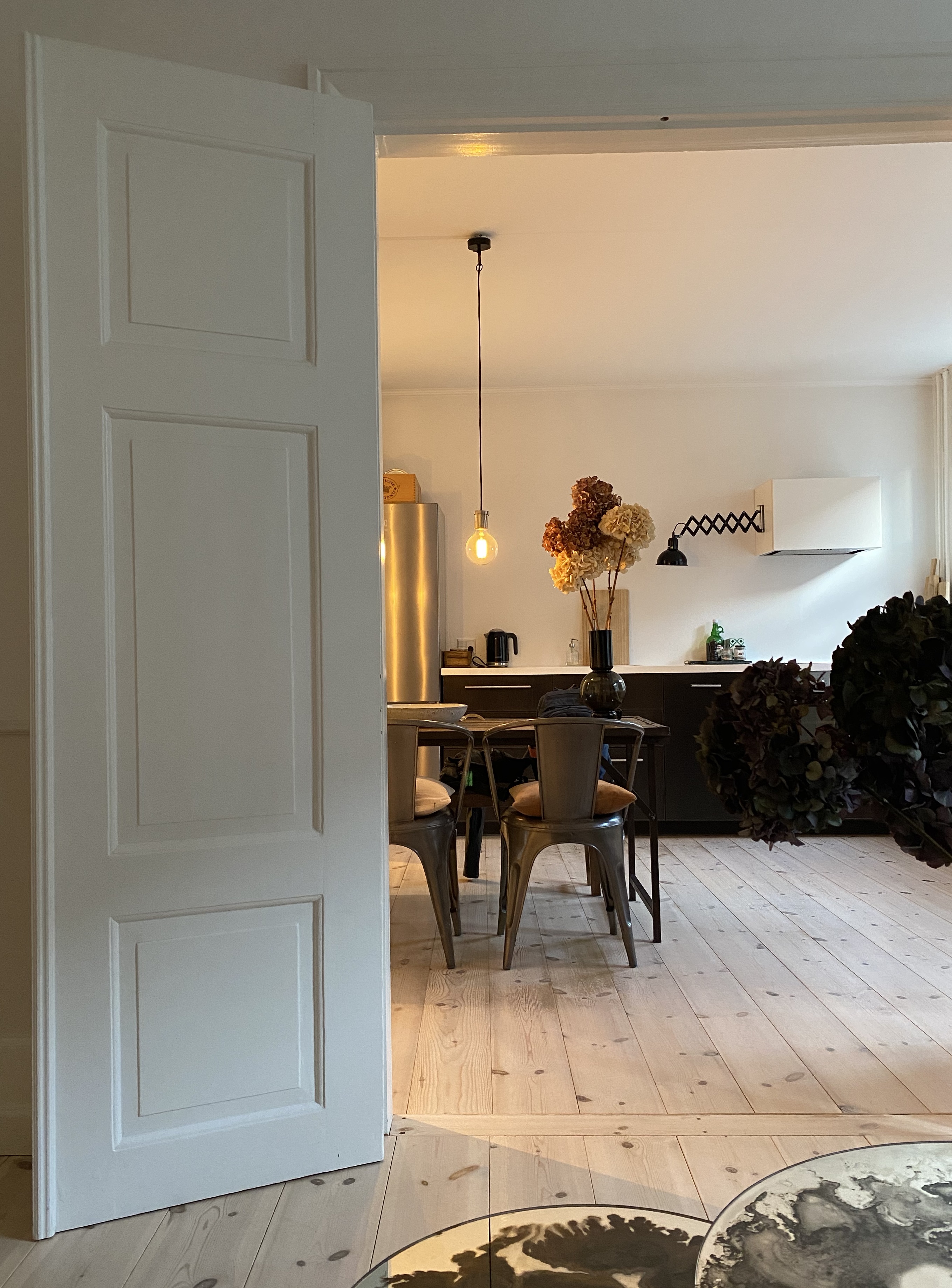
There is a lot of conflicting information on how to plan a cohesive interior design scheme. Do all your rooms need to match? How do you make your rooms flow together? How can it look cohesive without being too in your face?
Enter, The “Red Thread”
The concept of a red thread is simple – it’s a subtle theme that continues throughout a home or project that ties it all together. The red thread is born out of the principle of repetition. By adding repetitive elements, you create structure and overall cohesion.
Depending on if you own or rent, there are different ways to plan a cohesive design. For those who are building a new home or renovating finishes, materials and architectural elements are a great way to create cohesion while allowing spaces to have their own personality.
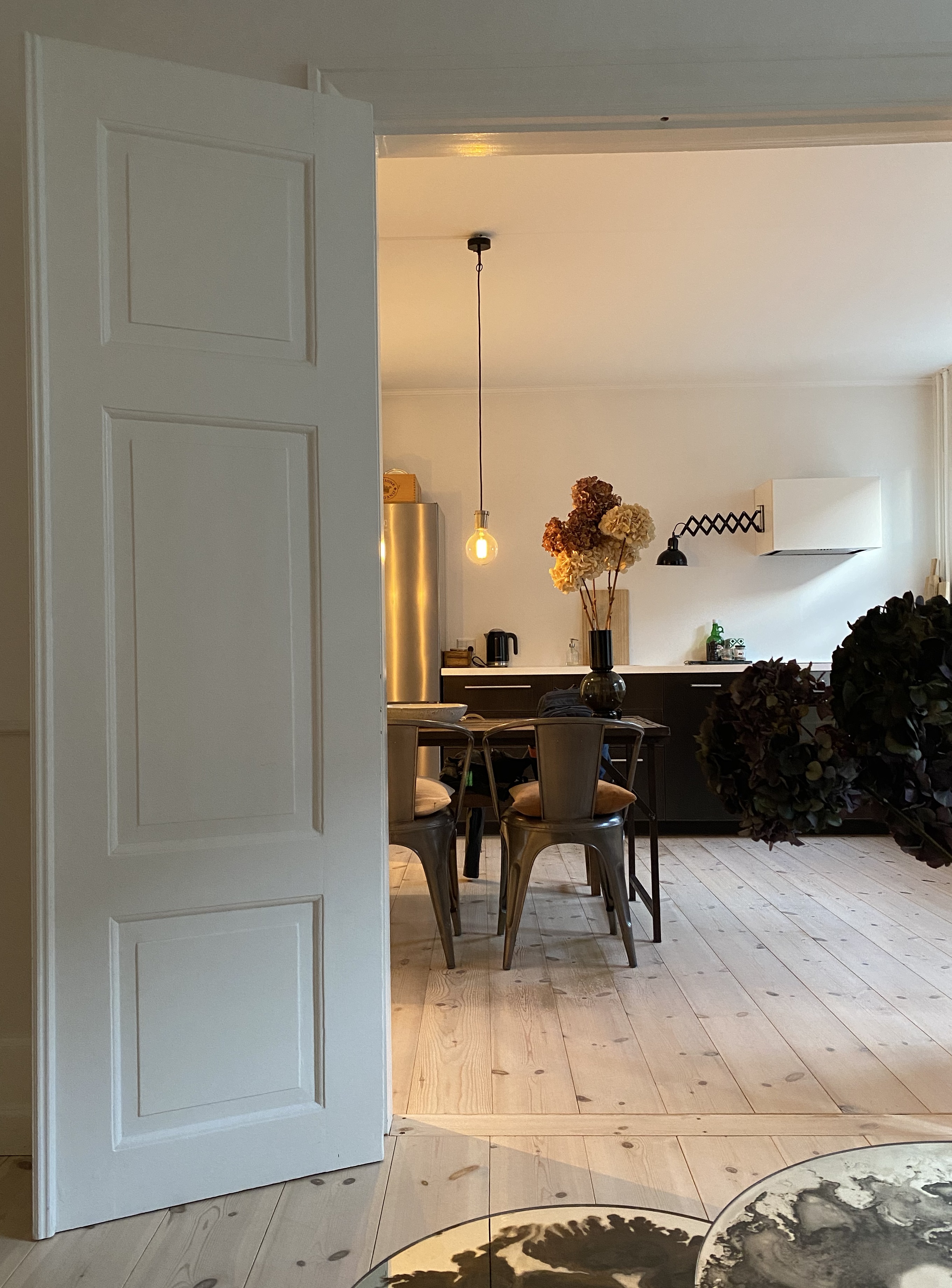
1. Structural Elements
In a recent project white oak floors, oil-rubbed bronze finishes, antique doors and simple trim were put in throughout the home. These finishing elements are the foundation for the design, They allow for different colors and patterns to be incorporated in furniture without it looking too out of place.
2. Using Color
Look to color for a more temporary option. Incorporating a light blue rug in one room and blue art in another create a tie without being too matchy. For those more confident with color, gradually increase saturation. Start with subtler elements in one space, and move to a room fully wrapped in navy paint. Havenly has great tips if you’re feeling bolder.
3. Cohesion through furniture style or period
To use furniture as a red thread, stick to specific styles, materials or elements. Your home could be heavily influenced by mid-century design and feature furniture with clean lines, or skew more antique and eclectic with collected items from around the world. Tip: we never advocate for using all furniture from the same period. Use these instead as your focal points, and layer in different eras around it.
Pro Tip: Gut Check with a Moodboard
I find it incredibly helpful when planning spaces that will be adjacent to one another to create mood boards, and flip through them as though you are moving through the space. For example, start with all the furniture, colors and art you plan on for the living room. Then, flip to the dining room and do the same. When you switch between the two mood boards, do they feel like they are speaking the same language?